HISTORY
Middle Ground Lighthouse stands at the intersection of maritime history and modern preservation. Originally constructed to safeguard one of Virginia’s most active waterways, the structure has weathered more than a century of storms, ship traffic, automation, and neglect. Today, its history is inseparable from the extensive private rehabilitation that ensured its survival.
RESTORATION & TODAY
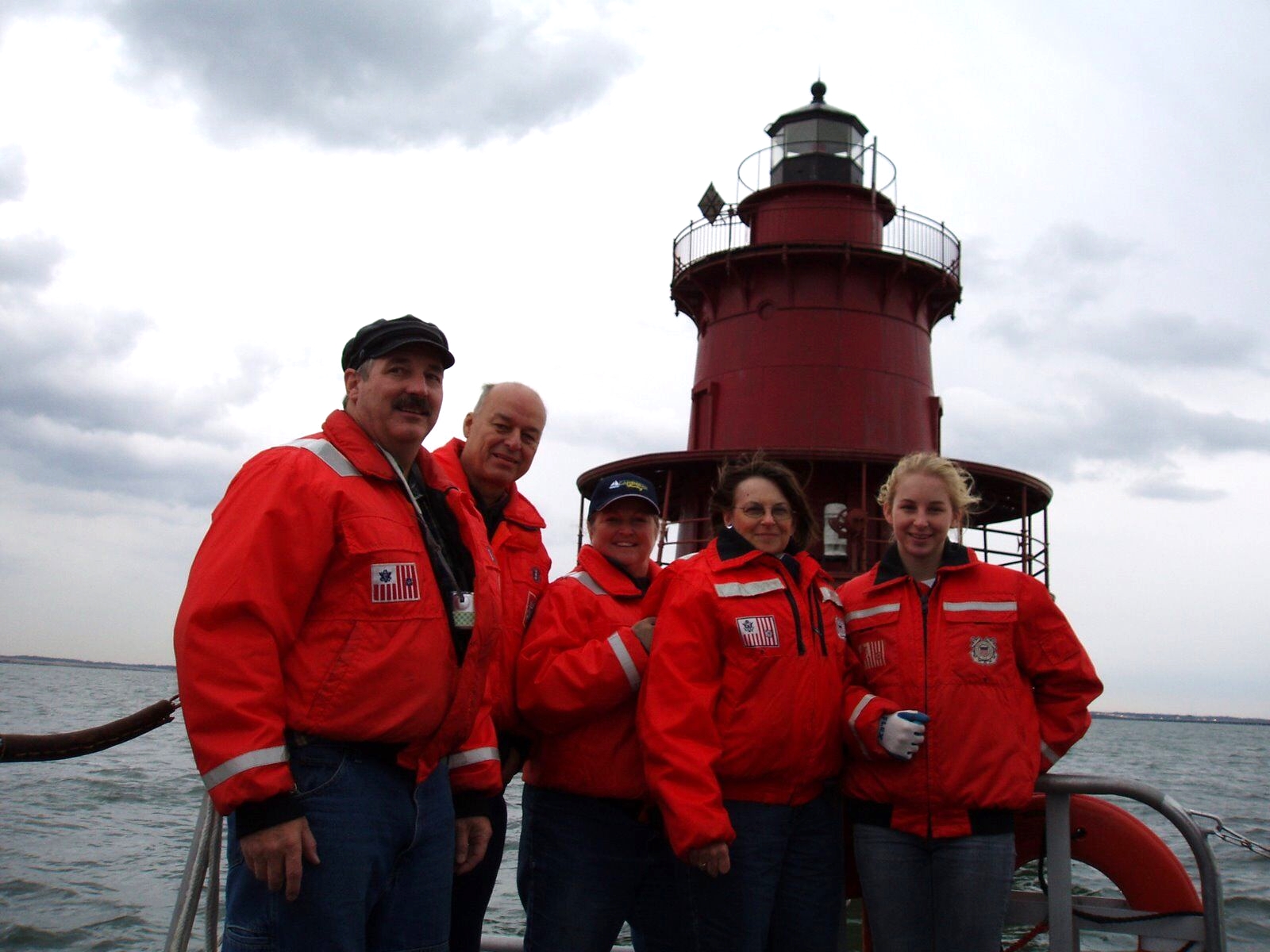
Following its purchase from the federal government in 2005, the lighthouse entered a new chapter of private stewardship. Ten engineers from the Billingsley and Gonsoulin families, supported by Eddie Prokop and a close network of friends, devoted more than 7,000 hours and over $300,000 to its rehabilitation.
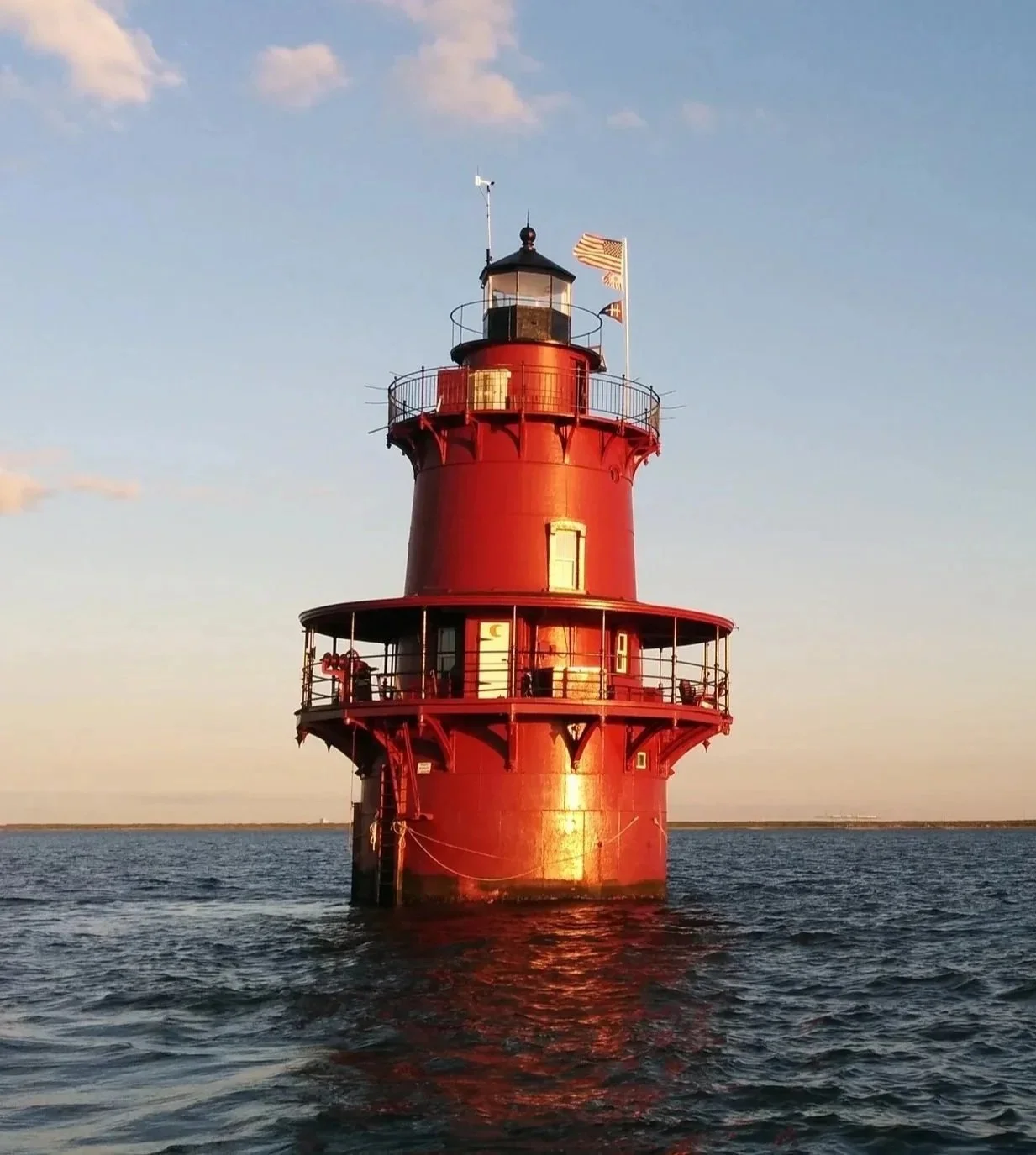
The work addressed both structural integrity and livability. In addition to extensive repairs, the team restored the rainwater collection systems, cisterns, plumbing, and pumps. The property now includes hot and cold pressurized water, a propane gas range, water heating, solar panels, a 10kW diesel generator, and 15kW of lithium phosphate battery storage supporting HVAC, lighting, and essential systems, along with a USCG-approved sanitation system.
Today, the lighthouse operates as a fully off-the-grid private residence, pairing historic structure with modern systems designed for independent living on the water.
As with any offshore historic property, continued ownership requires ongoing maintenance and thoughtful stewardship. The rehabilitation ensured the lighthouse’s stability and functionality; its preservation remains an active responsibility.
CONSTRUCTION
In 1887, the United States Lighthouse Board identified the need for a permanent navigational aid at Newport News Middle Ground Shoal, noting in its annual report:
“Vessels leaving the docks at Newport News drawing 24 feet of water invariably pass to the southward of the Middle Ground… masters now hesitate to leave their berths for sea on very dark or foggy nights.”
In 1888, Congress appropriated $50,000 for construction. Early bids proved insufficient, requiring design adjustments that preserved structural integrity while reducing cost. With those revisions in place, work began in the spring of 1890.
That summer, fabrication progressed across multiple sites. The wooden crib was assembled in Newport News, while the iron caisson and superstructure were produced and delivered through regional depots. By July, the caisson and foundation sections were towed to the shoal and sunk into position.
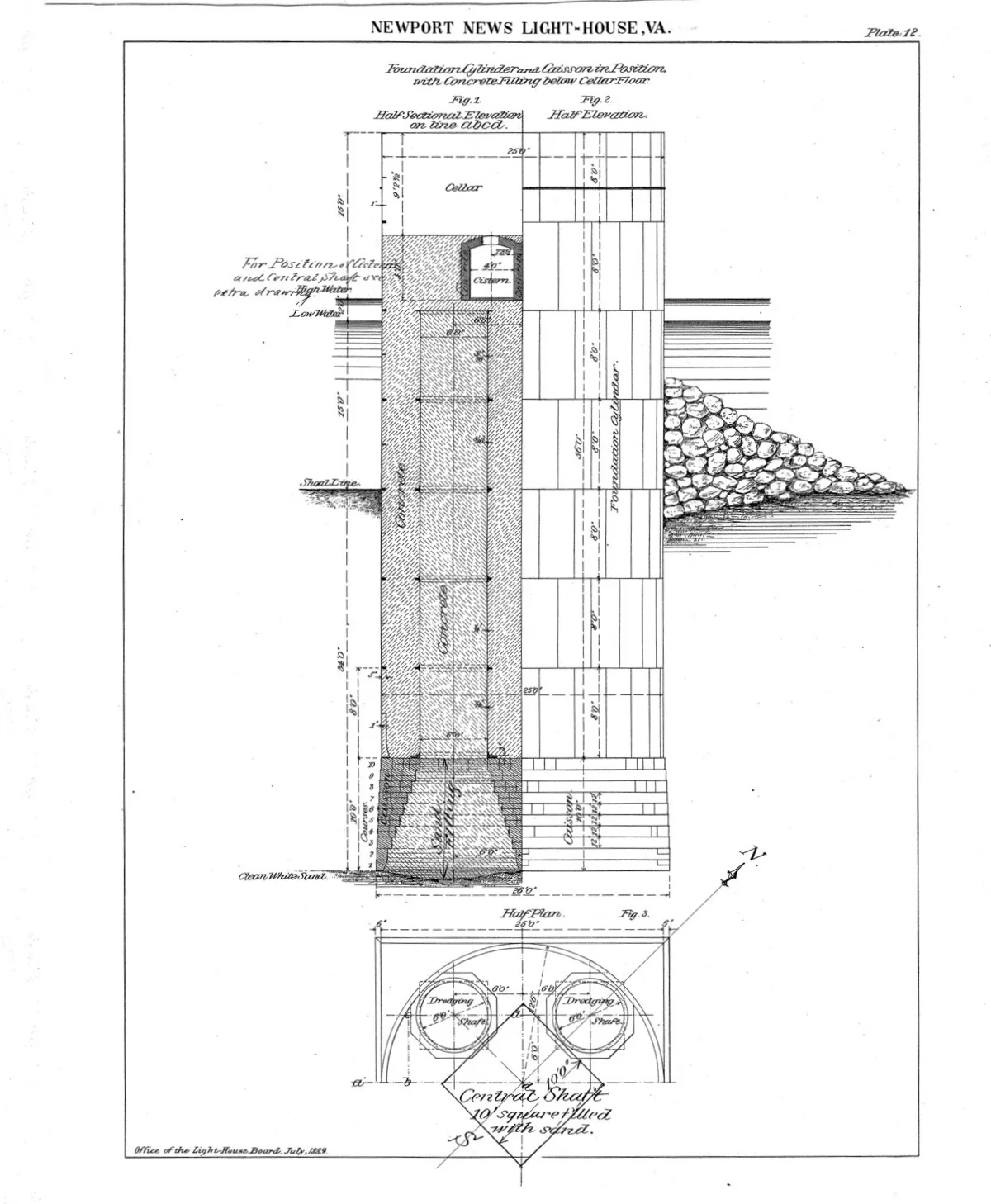
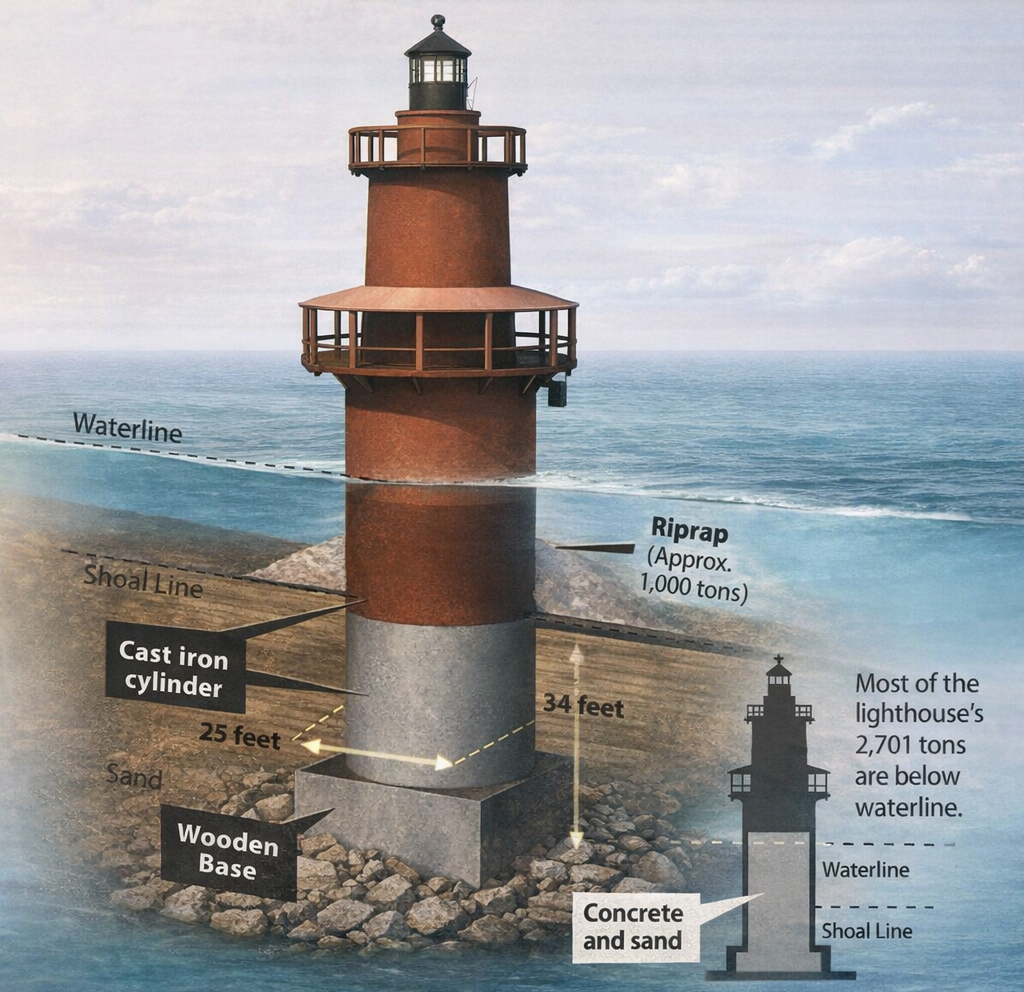
By October, the structure had reached a layer of clean white sand approximately 34 feet beneath the surface, providing a stable foundation. The iron tower was completed in January 1891, and on April 15, 1891, the light was first exhibited for the benefit of mariners.
Its original characteristic was a fixed white light accompanied by a flash every twenty seconds.
STRUCTURE
Surveys of Middle Ground Shoal determined that the seabed consisted of sand and clay, with a layer of clean white sand at depth, providing a suitable and stable foundation.
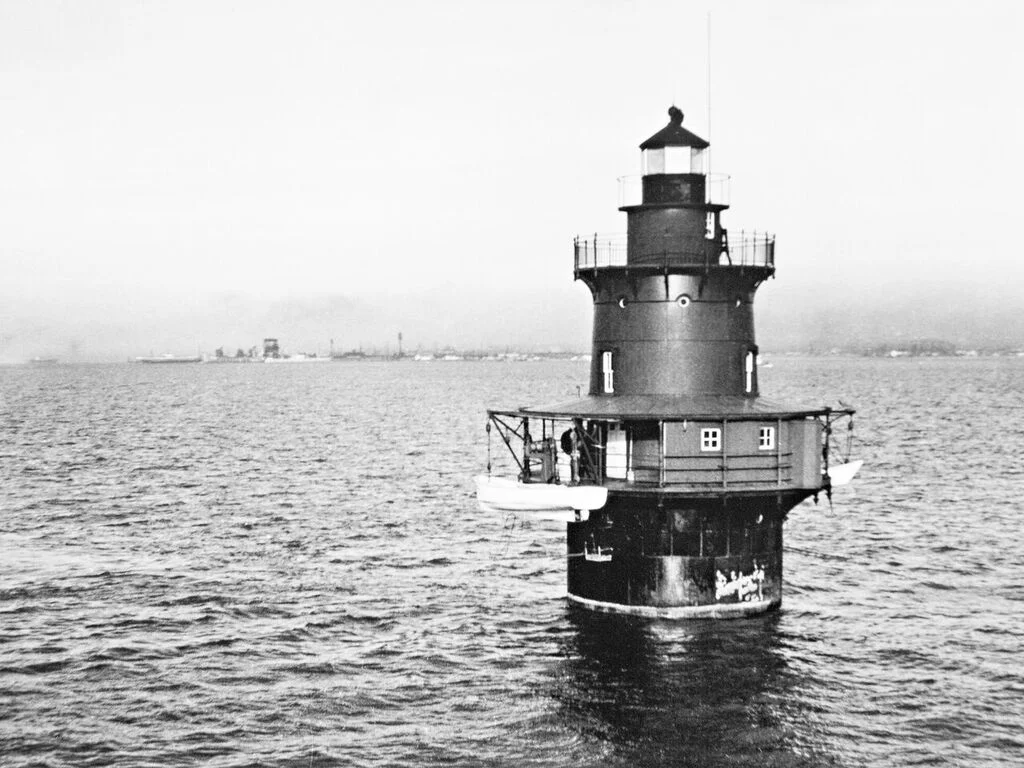
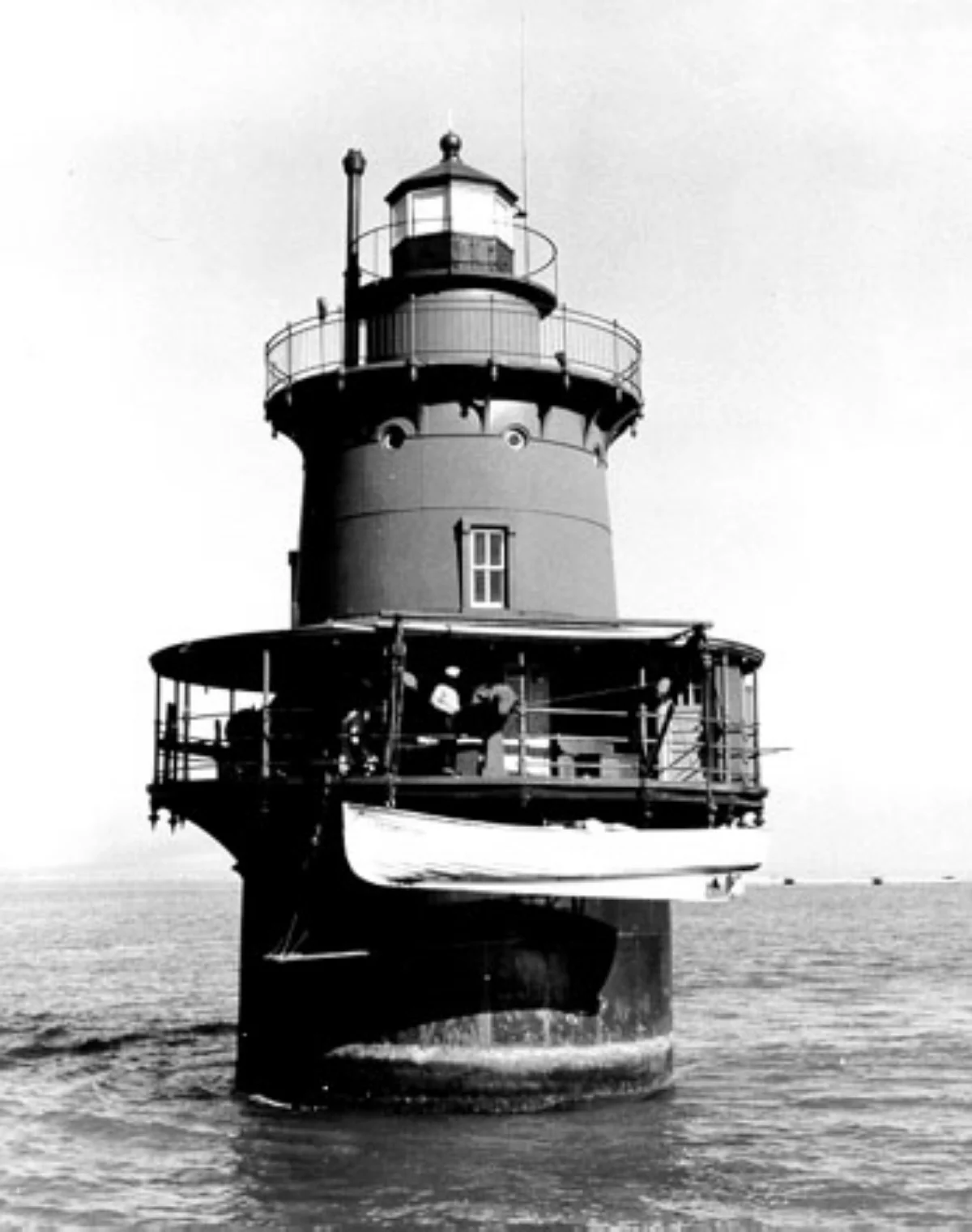
Based on earlier failures of screwpile lighthouse designs in similar environments, the Lighthouse Board selected a far more robust solution: a cast iron caisson foundation. This “sparkplug,” or “coffee pot,” design provided the mass and durability required to withstand open water conditions, including heavy winds, waves, vessel traffic, and winter ice.
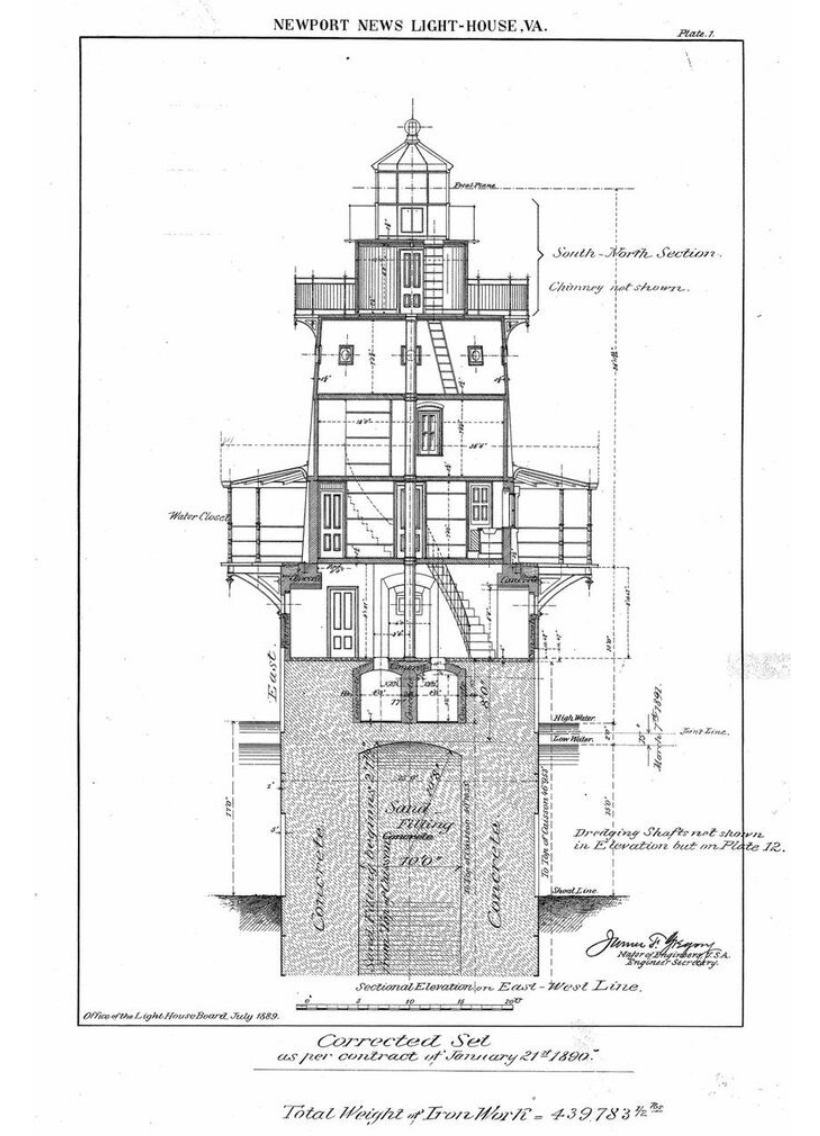
The caisson measures approximately 56 feet in height and 25 feet in diameter, rising roughly 15 feet above the waterline. It supports a conical iron tower standing 29 feet high, with the light positioned about 51 feet above the water. Today, Middle Ground Lighthouse is one of only 33 remaining sparkplug lighthouses in the United States.
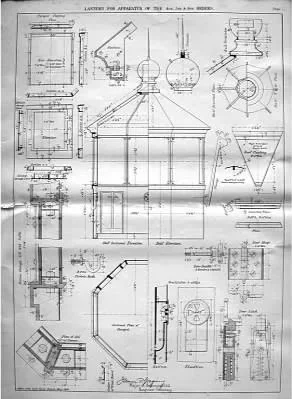
The structure contains five interior levels, connected by a circular staircase. The lowest level, or cellar, houses cisterns that collect rainwater from the roof above. The main level and upper floors are lined with brick and finished with heart pine flooring, while the uppermost watch and lantern rooms are constructed of iron and wood.
Originally, the station was equipped with a Stevens fog bell, sounding automatically at regular intervals to aid navigation in low visibility.
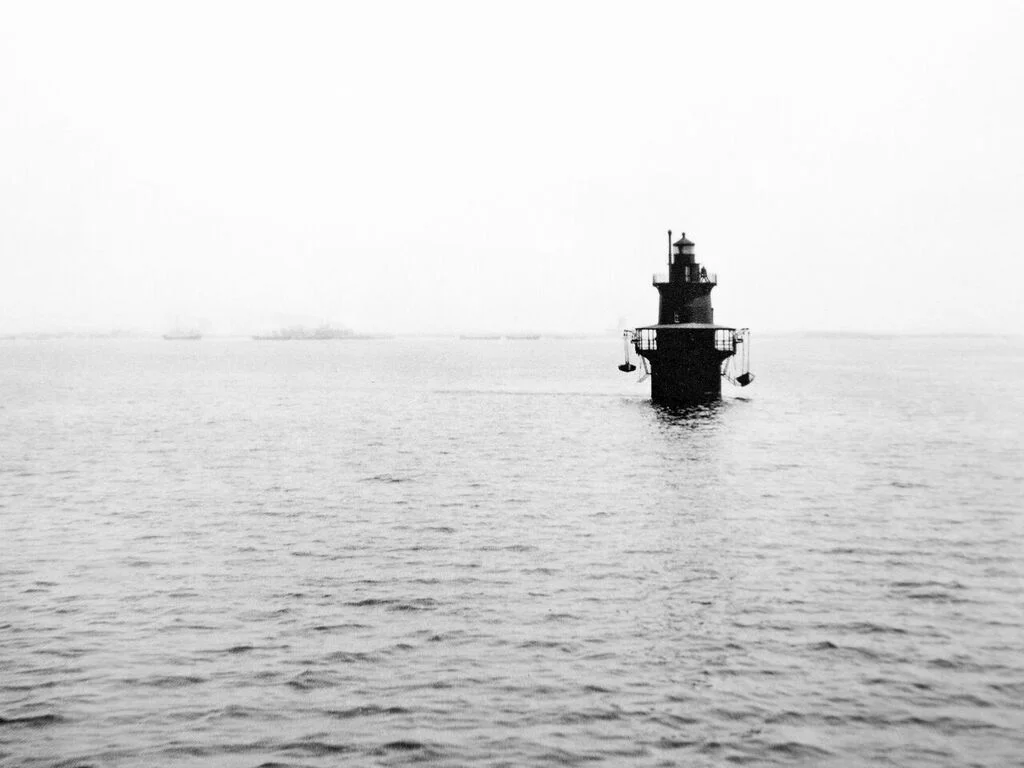
The station was automated in 1954, marking the beginning of its gradual decline. Without full-time keepers, regular maintenance became more limited, and exposure to salt air, storms, and constant wave action began to take its toll.
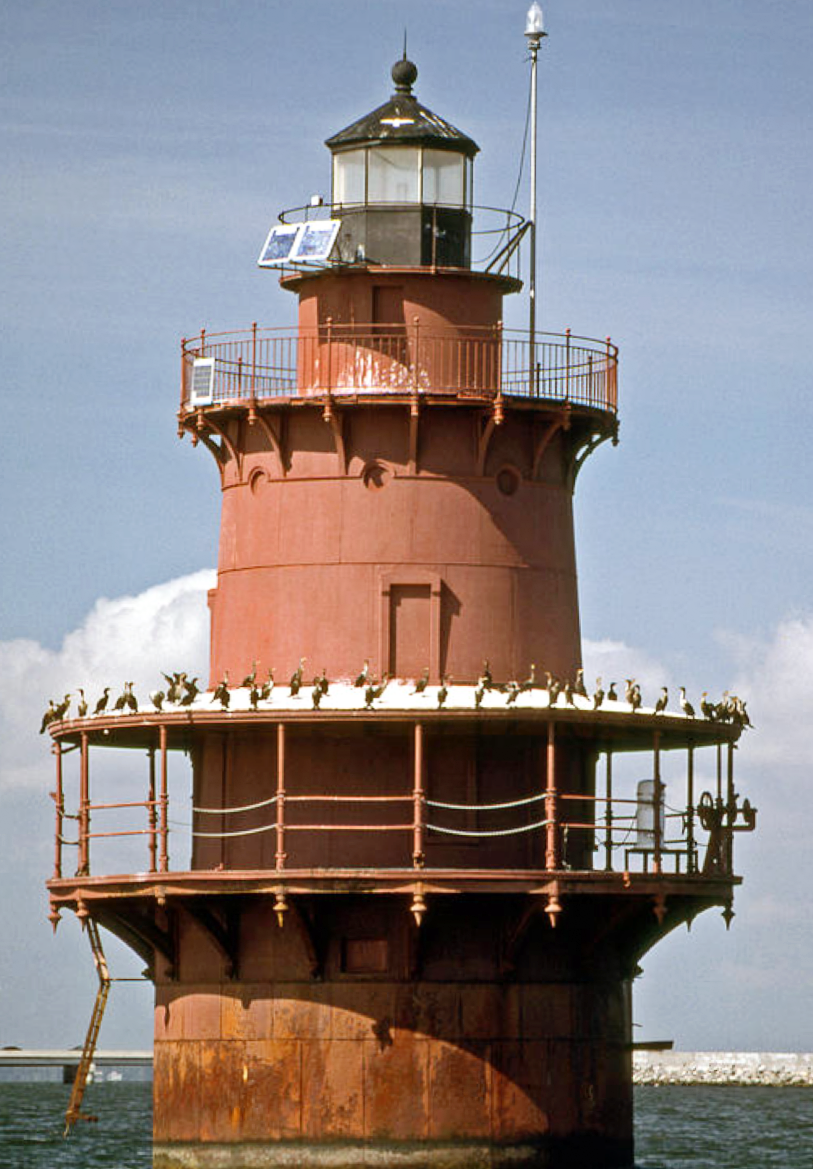
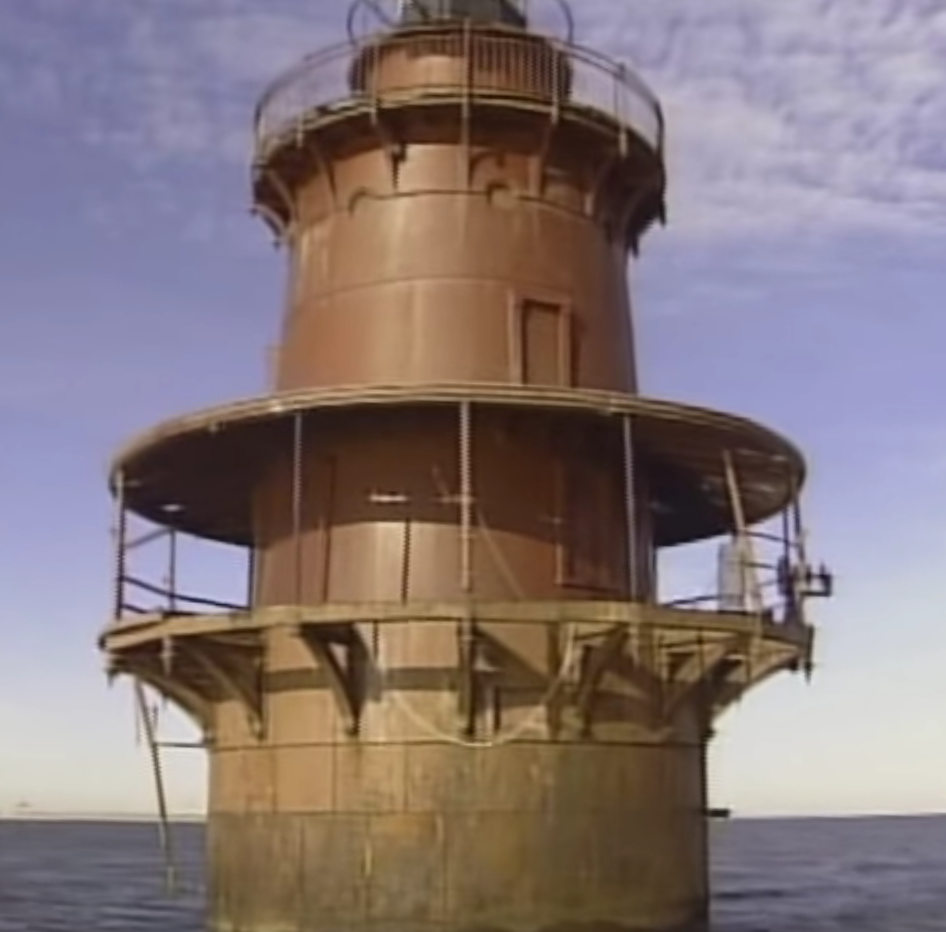
By the late 1970s and early 1980s, the effects were increasingly visible. In 1979, an errant vessel struck the lighthouse, damaging portions of the first-level decking and allowing water to penetrate the structure. Inspections in 1982 documented missing sections of the gallery railing, holes in the roof, leaking windows, and water intrusion into the foundation. Inside, paint was flaking, cisterns had filled with contaminated water, and upper levels had been left open to the elements, allowing birds to nest throughout the structure.
Efforts were made to stabilize the lighthouse. In 1987, solar power was introduced, and in 1988 the Coast Guard completed a series of repairs, including sandblasting, repainting, replacement railings, and installation of a safer access ladder.
Despite these improvements, inspections in the early 1990s continued to document corrosion and structural wear. Iron plates showed active rusting, water intrusion persisted, and pitting was observed along seams and near the waterline. Maintenance challenges extended even to record-keeping, with logs found to be incomplete or missing.
In 1992, following the opening of the nearby Monitor–Merrimac Bridge-Tunnel, the lighthouse’s beacon was changed from white to red to distinguish it from surrounding lights, marking the first major alteration to its visual identity in more than a century.
By the time it was offered for sale in 2005, the lighthouse remained structurally standing, but required substantial rehabilitation to ensure its long-term survival.
DETERIORATION & UPGRADES
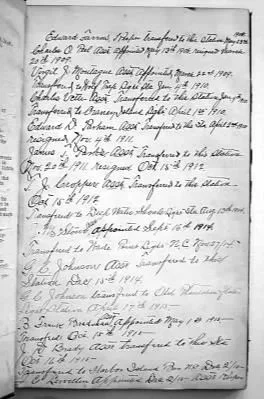
KEEPERS
James B. Hurst (Head 1891)
Daniel J. Clayton (Asst. 1891, Head 1891-1894)
E.M. Edwards (Assistant 1891)
George E. Evans (Assistant 1891-1892)
John A. Cornick (Assistant 1892-1895)
Charles F. Hudgins (Head 1894-1898)
John F. Hudgins (Assistant 1896-1899)
James E. Lewellen (Head 1898-1904, Asst. 1915)
Alpheus B. Willis (Assistant 1899)
Mumford Gwynn (Assistant 1899-1900)
William C. Simpson (Assistant 1900)
Charles Berry (Assistant 1900-1901)
Frederick Farrell (Assistant 1901-1902)
Edward Farrow (Asst. 1902-1907, Head 1908-1917
Rufus Hunley (July 17 - July 18 1917) one day!
Wesley F. Ripley (Head 1904-1906)
John F. Jarvis (Head 1906-1908)
Henry E. Ratcliffe (Assistant 1907-1908)
Charles O. Perl (Assistant 1908-1909)
V.J. Montague (Assistant 1909-1910)
Charles Vette (Assistant 1910)
Edward D. Parham (Assistant 1910-1911)
James T. Parks (Assistant 1911-1912)
Thomas J. Cropper (Assistant at least 1913)
George C. Johnson (Assistant 1915)
B.F. Bradshaw (Assistant 1915)
John E. Stubbs (Assistant 1917)
Carl G. Marsh (Assistant 1917-1918)
Malachi D. Swain (Head 1917 - at least 1920)
Martin B. Tolson (Assistant 1919 - at least 1920)
Henry H. Twiford (Assistant at least 1921)
Homer T. Austin (Head at least 1921)
William A. Gibbs (Asst. 1927-1928, 1938-1944)
Arthur M. Meekins (Head 1928-1940)
Edward B. Austin (Head 1941 - at least 1942)
Billingsley & Gonsoulin Families (2005-Present)
AUCTION
In 2000, Congress enacted the National Historic Lighthouse Preservation Act, establishing a process to transfer federally owned lighthouses no longer deemed essential.
In 2005, Middle Ground Lighthouse was offered for sale. Bob and Joan Gonsoulin, together with Dan and Jackie Billingsley, secured the property with a final bid of $31,000, marking its transition from federal stewardship to private ownership for the first time in its history.